⛟ Free delivery on orders over £60*
⏱ Next day delivery options
Explore the range of pool cleaners
⚗ Save time on maintenance with pool dosing systems


Looking for product…?
Pool Heating and Heat Pumps
Showing 37–42 of 42 results


A warm pool you can actually use, months longer each year. A pool heat pump pulls heat from the outside air and moves it into your water, so you swim in comfort without the running cost of an old electric heater. Find the right size for your pool below, from small above-ground pools to large commercial ones, with a UK sizing and running-cost guide further down.
Reviewed by Rhys, Senior Pool & Hot Tub Engineer at Blue Cube Direct. Our engineers size and fit pool heat pumps across the UK, so this guide is based on real installs, not lab figures.
Last updated 15 November 2026
Full & step inverter models
Sized for UK conditions
Free UK delivery over £60
Find your heat pump by pool size
Open your pool size to see the heat pumps that fit. Not sure of your pool volume? Ask us and we will work it out with you.
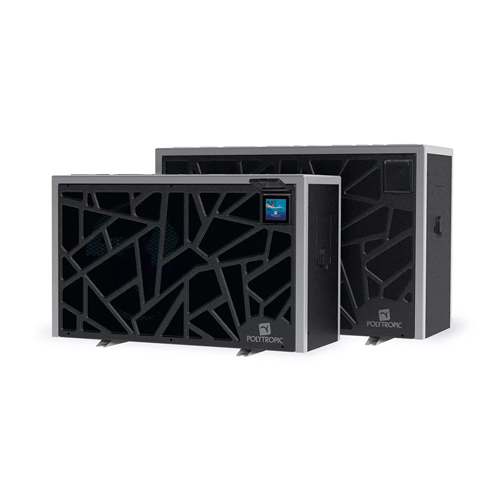
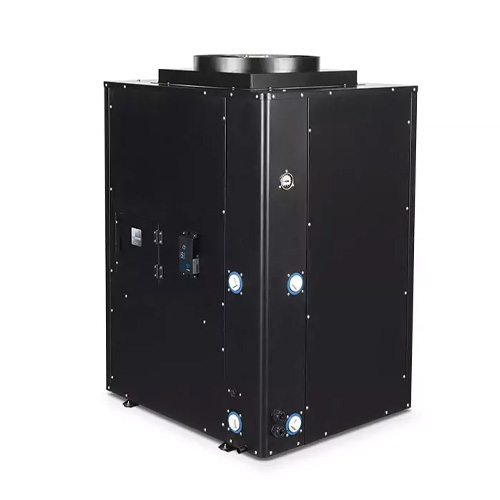

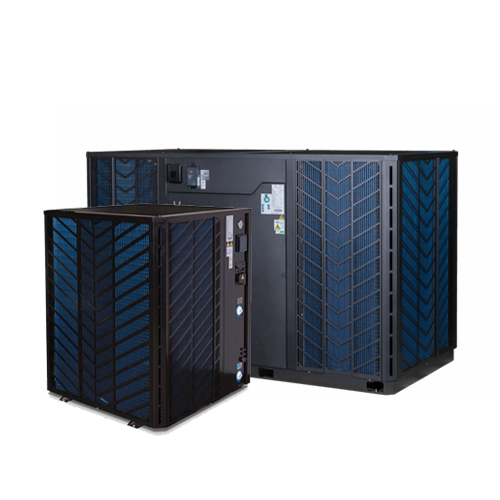
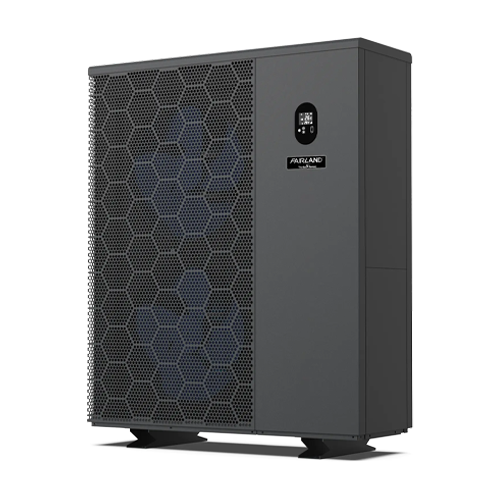

How to choose a pool heat pump
1
Size it to your pool
Heat pumps are matched to pool volume in cubic metres. Use the sizing table below, then match it to a model. If you are between sizes, go up a size for faster heating and shorter run times.
2
Full inverter or step inverter
A full-inverter model ramps its output up and down to match demand, which keeps it quiet and lowers running cost over a season. A step inverter changes output in fixed steps and tends to cost less up front.
3
Indoor, outdoor or tight space
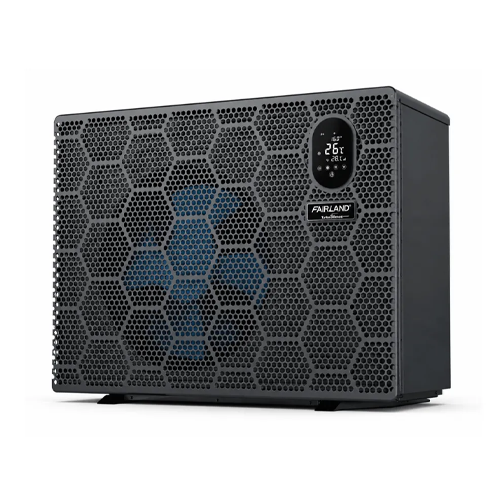
Most heat pumps sit outside. The Polytropic Indoor is built for an indoor plant room. For a narrow garden, a vertical-discharge unit like the Fairland InverX Vertical blows air upward, which helps near a fence line, and it keeps heating down to -15°C.
4
Running cost & a cover
A heat pump gives out several times more heat than the electricity it uses. A pool cover holds that heat in overnight and cuts how long the pump runs, which is the single biggest saving you can make.
UK sizing guide: pool volume to heat pump output
Find your pool volume in cubic metres, then read across. These are guide figures for a covered outdoor pool in a UK summer, around 15°C air and a 26 to 28°C target, not inflated Mediterranean lab ratings. An uncovered pool, a longer season or a cold spell all push you up a size.
Guide only. Send us your pool length, width and average depth and we will size it exactly, free. Flow rate is the water flow the heat pump needs, so match it to your circulation pump.
What will it cost to run?
A heat pump does not make heat, it moves it, so it returns several times more heat than the electricity it draws. Full-inverter models commonly quote a COP of 5 to 7 in mild UK weather. That is a manufacturer figure, so treat it as a best case.
As a worked example: a 9 kW heat pump at a COP of 5 draws about 1.8 kW of electricity. Holding a covered pool at temperature for about 6 hours a day is roughly 11 kWh a day. At the October to December 2026 price-cap rate of about 26p per kWh, that is about £2.80 a day, or roughly £420 across a May to September season.
Leave the cover off, keep the water hotter or swim year round and the figure climbs. A good cover is the single biggest saving. Use this as a guide, not a quote, because your real cost depends on your pool, the weather and your electricity tariff.
Full inverter or step inverter: which suits you?
Fitting one in the UK: what to check
Power supply. Smaller heat pumps can run from a standard 13A supply. Larger ones are hardwired to a dedicated rotary isolator. All electrical work should meet Part P of the building regulations and be done by a qualified electrician.
Single or three-phase. Most UK homes are single-phase. As a rough limit, heat pumps above about 20 to 24 kW usually need three-phase, and a very high-draw unit may mean your electrician notifies the DNO (your local network operator). Check your supply before buying a large unit.
Water and flow. The heat pump plumbs into your pool circulation after the filter, usually on a bypass so you can control flow. Match the unit’s required flow rate, shown in the sizing table, to your pump.
Noise and position. Site the unit where its airflow is clear and its noise sits within your boundary. Most domestic units run around 40 to 45 dB(A) close up, about the level of a quiet room, but a tight garden or a close fence line is worth planning around. A vertical-discharge model blows air upward, which helps in a narrow space.
Winter running. In cold weather a heat pump periodically defrosts, which briefly lowers output. To heat through winter, choose a model rated for low ambient temperatures.
Supply limits and local rules vary, so confirm the detail with your electrician and installer before you buy.
Want the full picture on pool heating first? Read our swimming pool heating guide, or ask us and we will size one to your pool.
Pool heat pump FAQs
What size heat pump do I need for my pool?
Match the heat pump to your pool volume in cubic metres. As a rough guide for a covered outdoor pool in a UK summer, allow about 5 to 7 kW up to 20 m³, 11 to 16 kW for 40 to 70 m³, and 21 to 30 kW for 110 to 160 m³. An uncovered pool or a longer season pushes you up a size. Send us your pool dimensions and we will size it exactly.
What will a pool heat pump cost to run?
A heat pump moves heat rather than making it, so it returns several times more than the electricity it draws. As an illustration, a 9 kW unit at a COP of 5 draws about 1.8 kW, and holding a covered pool for about 6 hours a day uses roughly 11 kWh. At the October to December 2026 price-cap rate of about 26p per kWh that is about £2.80 a day, or roughly £420 across a May to September season. A cover is the biggest saving. Your real cost depends on your pool, the weather and your tariff.
What is the difference between a full inverter and a step inverter?
A full-inverter heat pump varies its output smoothly to match demand, so it runs quietly and uses less power across a season. A step inverter changes output in fixed stages and usually costs less to buy. Neither is better overall. Full inverter suits frequent use, step inverter suits occasional use.
Do pool heat pumps qualify for the Boiler Upgrade Scheme?
No. The Boiler Upgrade Scheme is for heat pumps that heat your home, so they must provide space heating and hot water for the property and be MCS certified. A heat pump that only heats a swimming pool does not qualify. Heating your home with a heat pump is a separate installation.
Is there 0% VAT on a pool heat pump?
No. The 0% VAT relief on energy-saving materials is for heat pumps that heat your home, not a swimming pool. Pool heat pumps are standard-rated, so the prices shown include VAT at the standard rate. VAT rules change, so check the current position if you are unsure.
Do I need three-phase power for a pool heat pump?
Most UK homes are single-phase, which suits the majority of domestic heat pumps. As a rough limit, units above about 20 to 24 kW usually need a three-phase supply, and a very high-draw unit may mean your electrician notifies your local network operator. Check your supply before buying a large unit.
Can a pool heat pump work in winter?
Many run in cold weather and some are built for it. The Fairland InverX Vertical, for example, keeps heating in outdoor air down to -15°C. In the cold a heat pump periodically defrosts, which briefly lowers output, so if you want to swim through winter, check the model’s low-temperature rating before you buy.
Do I need an electrician to install one?
Yes. Smaller heat pumps can run from a standard 13A supply, while larger ones are hardwired to a dedicated isolator. All electrical work should meet Part P of the building regulations and be done by a qualified electrician, with the unit plumbed into your pool circulation on a bypass. If you need a hand, get in touch and we will point you in the right direction.